The One-Origin Story Behind a Regional Dish
A regional dish rarely starts with one inventor. Learn how ingredients, cooking methods, and shared occasions shape its character without flattening its living traditions.
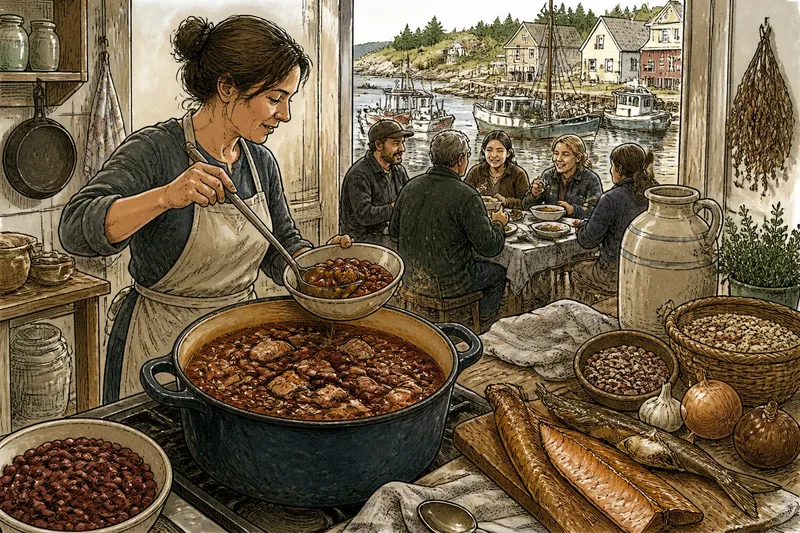
A pot of red beans can taste different from one parish to the next, even when cooks use much the same ingredients. A regional dish takes shape not only through what goes into it, but through the kitchens, seasons, and occasions that keep a particular version in use.
The familiar tale of one inventor and one decisive day makes a fine anecdote, but it can distract from the more interesting story: how cooks adapt food to local supplies and tastes, then pass those choices along. The dish becomes recognizable through repetition, not necessarily through a single beginning.
What makes a dish feel regional?
A food gains a regional character when people connect its flavor and preparation to a place. That connection may rest on a particular grain, fish, or preserved fruit, but it can also come from a cooking method, a serving habit, or the name people use in one town rather than another.
These elements need not share one history. A cooking technique might arrive with newcomers; a locally grown ingredient might later become its signature; a name might spread through restaurants or community gatherings. Over time, those pieces can settle into a version that residents recognize as belonging to their place.
How do local kitchens change a recipe?
Cooks make practical decisions. They use what is in season, what keeps well, what is familiar, and what a household can obtain. When a recipe travels, its ingredients and methods may shift to suit new conditions. That adaptation is part of a dish’s story, not a footnote to it.
Imagine a family in a coastal town making a bean stew with smoked fish and a cooking method carried there by newcomers. If local cooks begin using a familiar inland bean and serve the stew at a harbor gathering, those choices could give the dish a distinct local character. This invented scenario describes a plausible process, not a documented history of any particular food.
Why do recipes and names travel differently?
A dish can circulate for years before its current name appears in print. A household may call it simply “the bean pot,” while a market or restaurant gives it a shorter name that catches on elsewhere. Pronunciation and spelling can also vary between neighboring communities.
Cookbooks, menus, local newspapers, and family notes each preserve a different kind of record. A printed recipe can show that someone used a name and prepared a version by the time it appeared. It does not, on its own, tell us when the food first entered a kitchen or whether every household used that name.
It is not worth forcing every household variation into one official recipe. If cooks in neighboring towns disagree about a seasoning or name, that difference may be more revealing than a standardized version.
How do shared occasions shape a dish?
People often remember a food through the moment it belongs to: a harvest supper, a winter gathering, or a meal carried to a community event. Repeated occasions give dishes social meaning. The taste becomes tied to a place on the calendar and to the people who make and share it.
Those customs can change. A dish once prepared mainly at home may become associated with a public celebration, or cooks may substitute an ingredient that is harder to obtain. The tradition lives through people using and adapting it, rather than by holding every detail still.
What questions help explain a regional dish?
Does the oldest written recipe show where a dish began?
It shows that a version was recorded by the time the recipe appeared. Earlier cooking may have left no written record, so an old printed recipe cannot by itself establish a point of invention.
Can a dish belong to a region if its ingredients came from elsewhere?
Yes. Cooks can adapt ingredients and methods to local tastes and occasions, building a recognizable regional version from materials with broader histories.
Why might neighboring towns claim the same food?
Families, markets, and gatherings connect nearby places, carrying recipes across local boundaries. Related versions can belong to several communities without being identical.
What can a cookbook tell you about a dish?
A cookbook can document a recipe, its wording, and the name used at the time of publication. Compare it with other records and living cooking traditions to understand how the food is prepared and described in different places.
How can you describe a dish without flattening it?
Start with what people actually cook and serve. Note which ingredients or methods recur, how the food changes from one household or town to another, and what occasions bring it to the table. Then connect those details to the places and people who keep the dish in use.
- Observe the ingredients: If cooks consistently use a locally familiar staple, describe its role; if ingredients vary, name the variation rather than presenting one version as universal.
- Compare the method: If households share a preparation technique, explain how it shapes the dish; if methods differ, describe the distinct approaches.
- Check the name: If a name appears in local records and everyday use, identify where it is used; if names vary, retain the local terms.
- Ask when people serve it: If the dish recurs at a particular gathering or season, explain that connection; if no shared occasion emerges, focus on household or everyday use.
- Look at written recipes: If a recipe is documented, say what it records; if earlier history is unclear, avoid treating publication as proof of invention.
- Listen for local distinctions: If residents distinguish versions by town or household, include those differences; if accounts conflict, describe the disagreement without forcing a single standard.
A regional dish is often best understood through the choices people continue to make around it. Follow the ingredients into local kitchens, notice how names and occasions shape recognition, and let the dish remain as varied as the communities that cook it.